Leakage and Sealing in CO2 Geological Storage: Driving Forces, Resistance and Mechanisms
Abstract
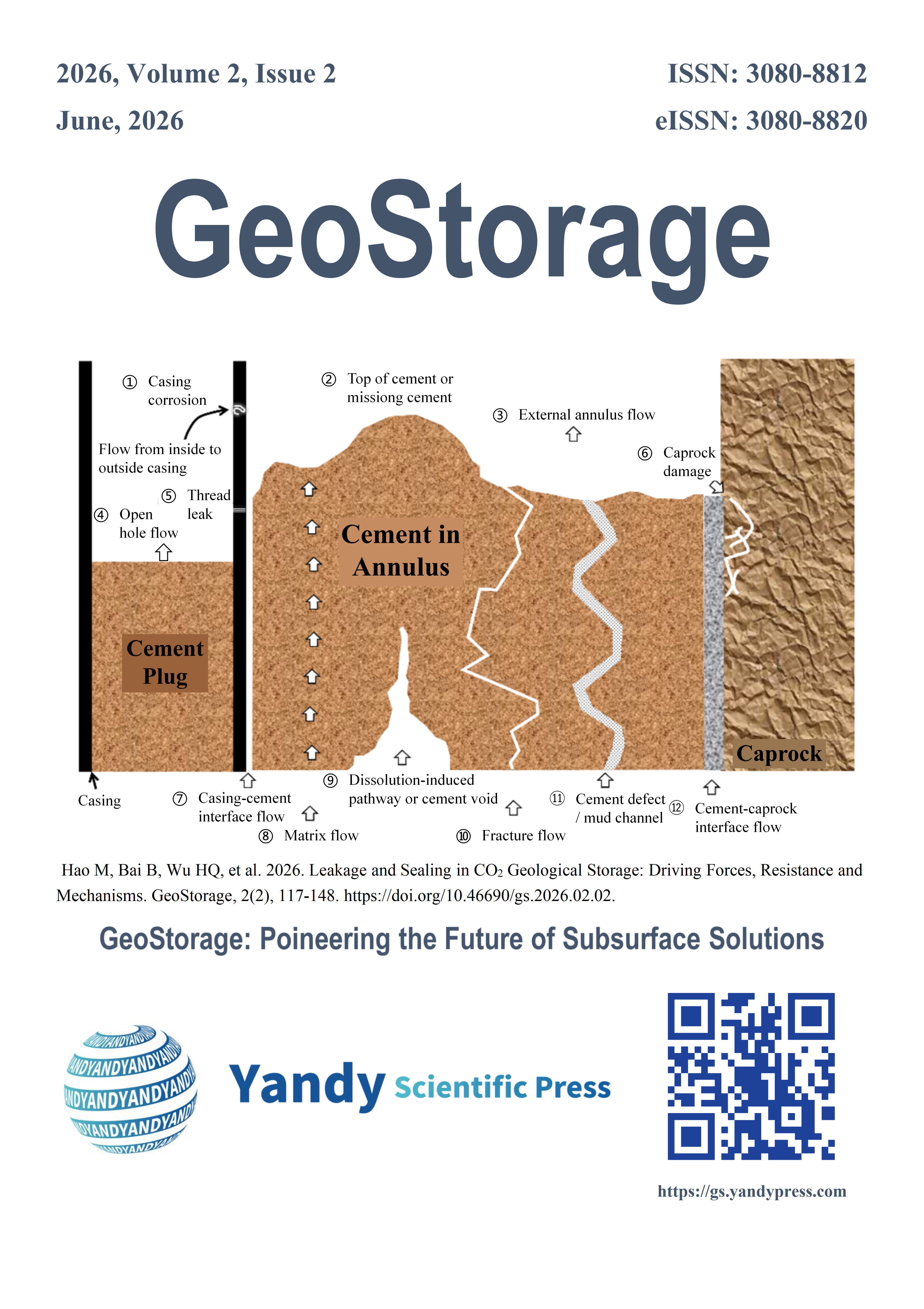
As a key strategy for achieving carbon neutrality, the safety and effectiveness of CO2 geological storage depend on a thorough understanding of leakage dynamics and sealing mechanisms. Adopting a multi‑scale perspective spanning pore, core, reservoir, site, and basin levels, this review systematically examines the structural characteristics of storage and migration spaces, identifies primary leakage pathways governed by faults, caprocks, and wellbores, and classifies dominant leakage modes. To address common conceptual ambiguities and scale‑disconnect issues in conventional studies, we propose a unified multi‑scale definition framework based on the “object–process–boundary” concept, which clearly distinguishes among migration, transformation, sealing, and leakage behaviors. On this basis, we elucidate the dynamic coupling between driving mechanisms (e.g., buoyancy, pressure perturbation) and resistance mechanisms (e.g., capillary sealing, mineral reactions), and clarify their variations across scales and dimensions. Finally, a closed‑loop “monitoring–prediction–regulation–intervention” framework, centered on stress management, is developed to provide systematic concepts and practical methodologies for risk assessment, monitoring design, and engineering control. This study provides a systematic synthesis across multiple scales, from pores to basins, forming a comprehensive foundation for assessing and ensuring the safety and efficiency of geological carbon storage projects.
Article Typre: Research article
Cited as:
Hao M, Bai B, Wu HQ, et al. 2026. Leakage and Sealing in CO2 Geological Storage: Driving Forces, Resistance and Mechanisms. GeoStorage, 2(2), 106-136.
DOI:
https://doi.org/10.46690/gs.2026.02.02Keywords:
CO2 geological storage, multi-scale characteristics, leakage modes, sealing definition, stress managementReferences
Adamu B, Gholami R, Downey W, et al. 2019. A novel approach to determine across-fault leakage in CO2 reservoirs. Journal of Petroleum Science and Engineering, 181: 106227. https://doi.org/10.1016/j.petrol.2019.06.001.
Adisornsupawat K, Sangnimnuan A, Rabiabpo P, et al. 2024. Evaluation of caprock integrity with laboratory scale in-situ CO2 injection test. ARMA US Rock Mechanics/Geomechanics Symposium, ARMA D041S054R002. https://doi.org/10.56952/ARMA-2024-0671.
Ajayi T, Gomes JS, Bera A. 2019. A review of CO2 storage in geological formations emphasizing modeling, monitoring and capacity estimation approaches. Petroleum Science, 16: 1028–1063. https://doi.org/10.1007/s12182-019-0340-8.
Al Haddad S, Mancini EA. 2013. Reservoir characterization, modeling, and evaluation of Upper Jurassic Smackover microbial carbonate and associated facies in Little Cedar Creek field, southwest Alabama, eastern Gulf coastal plain of the United States. AAPG Bulletin, 97(11): 2059–2083. https://doi.org/10.1306/07081312187.
Aminu MD, Nabavi SA, Rochelle CA, et al. 2017. A review of developments in carbon dioxide storage. Applied Energy, 208: 1389–1419. https://doi.org/10.1016/j.apenergy.2017.09.015.
Appelo CAJ, Postma D. 2004. Geochemistry, Groundwater and Pollution, 2nd ed. CRC Press / Balkema. https://doi.org/10.1201/9781439833544.
Bachu S, Watson TL. 2009. Review of failures for wells used for CO2 and acid gas injection in Alberta, Canada. Energy Procedia, 1: 3531–3537. https://doi.org/10.1016/j.egypro.2009.02.146.
Bachu S. 2008. CO2 storage in geological media: Role, means, status and barriers to deployment. Progress in Energy and Combustion Science, 34: 254–273. https://doi.org/10.1016/j.pecs.2007.10.001.
Bachu S, Bennion B. 2008. Effects of in-situ conditions on relative permeability characteristics of CO2-brine systems. Environmental Geology, 54: 1707–1722. https://doi.org/10.1007/s00254-007-0946-9.
Bachu S, Bennion DB. 2009. Interfacial tension between CO2, freshwater, and brine in the range of pressure from (2 to 27) MPa, temperature from (20 to 125) ◦C, and water salinity from (0 to 334 000) mg·L−1. Journal of Chemical & Engineering Data, 54(3): 765–775. https://doi.org/10.1021/je800529x.
Bachu S. 2003. Screening and ranking of sedimentary basins for sequestration of CO2 in geological media in response to climate change. Environmental Geology, 44: 277–289. https://doi.org/10.1007/s00254-003-0762-9.
Bachu S, Gunter WD, Perkins EH. 1994. Aquifer disposal of CO2: hydrodynamic and mineral trapping. Energy Conversion and Management, 35(4): 269–279. https://doi.org/10.1016/0196-8904(94)90060-4.
Bai B, Li X, Wu H, et al. 2017. A methodology for designing maximum allowable wellhead pressure for CO2 injection: application to the Shenhua CCS demonstration project, China. Greenhouse Gases: Science and Technology, 7(1): 158–181. https://doi.org/10.1002/ghg.1640.
Bai M, Sun J, Song K, et al. 2015. Evaluation of mechanical well integrity during CO2 underground storage. Environmental Earth Sciences, 73: 6815–6825. https://doi.org/10.1007/s12665-015-4157-5.
Benali B, Føyen TL, Alcorn ZP, et al. 2022. Pore-scale bubble population dynamics of CO2-foam at reservoir pressure. International Journal of Greenhouse Gas Control, 114: 103607. https://doi.org/10.1016/j.ijggc.2022.103607.
Bense VF, Gleeson T, Loveless SE, et al. 2013. Fault zone hydrogeology. Earth-Science Reviews, 127: 171–192. https://doi.org/10.1016/j.earscirev.2013.09.008.
Bensinger J, Beckingham LE. 2020. CO2 storage in the Paluxy formation at the Kemper County CO2 storage complex: Pore network properties and simulated reactive permeability evolution. International Journal of Greenhouse Gas Control, 93: 102887. https://doi.org/10.1016/j.ijggc.2019.102887.
Birkholzer JT, Zhou Q, Tsang CF. 2009. Large-scale impact of CO2 storage in deep saline aquifers: A sensitivity study on pressure response in stratified systems. International Journal of Greenhouse Gas Control, 3: 181–194. https://doi.org/10.1016/j.ijggc.2008.08.002.
Blunt MJ, Bijeljic B, Dong H, et al. 2013. Pore-scale imaging and modelling. Advances in Water Resources, 51: 197–217. https://doi.org/10.1016/j.advwatres.2012.03.003.
Brantley SL, Conrad CF. 2008. Analysis of rates of geochemical reactions. In: Kinetics of Water-Rock Interaction, Springer, pp. 1–37. https://doi.org/10.1007/978-0-387-73563-4_1.
Bryant SL, Lakshminarasimhan S, Pope GA. 2008. Buoyancy-dominated multiphase flow and its effect on geological sequestration of CO2. SPE Journal, 13(04): 447–454. https://doi.org/10.2118/99938-PA.
Caine JS, Evans JP, Forster CB. 1996. Fault zone architecture and permeability structure. Geology, 24(11): 1025–1028. https://doi.org/10.1130/0091-7613(1996)024<1025:FZAAPS>2.3.CO;2.
Calabrese M, Masserano F, Blunt MJ. 2005. Simulation of physical–chemical processes during carbon dioxide sequestration in geological structures. SPE Annual Technical Conference and Exhibition, SPE 95820-MS. https://doi.org/10.2118/95820-MS.
Campos R, Barrios I, Lillo J. 2015. Experimental CO2 injection: Study of physical changes in sandstone porous media using Hg porosimetry and 3D pore network models. Energy Reports, 1: 71–79. https://doi.org/10.1016/j.egyr.2015.01.004.
Cappa F, Rutqvist J. 2011. Modeling of coupled deformation and permeability evolution during fault reactivation induced by deep underground injection of CO2. International Journal of Greenhouse Gas Control, 5: 336–346. https://doi.org/10.1016/j.ijggc.2010.08.005.
Carrillo FJ, Bourg IC. 2021. Capillary and viscous fracturing during drainage in porous media. Physical Review E, 103(6): 063106. https://doi.org/10.1103/PhysRevE.103.063106.
Carroll S, Carey JW, Dzombak D, et al. 2016. Review: Role of chemistry, mechanics, and transport on well integrity in CO2 storage environments. International Journal of Greenhouse Gas Control, 49: 149–160. https://doi.org/10.1016/j.ijggc.2016.01.010.
Celia MA, Bachu S, Nordbotten JM, et al. 2015. Status of CO2 storage in deep saline aquifers with emphasis on modeling approaches and practical simulations. Water Resources Research, 51(9): 6846–6892. https://doi.org/10.1002/2015WR017609.
Celia MA, Bachu S, Nordbotten JM, et al. 2005. Quantitative estimation of CO2 leakage from geological storage: Analytical models, numerical models and data needs. Greenhouse Gas Control Technologies 7, I:663–671. https://doi.org/10.1016/B978-008044704-9/50067-7.
Chadwick RA, Arts R, Bentham M, et al. 2009. Review of monitoring issues and technologies associated with the long-term underground storage of carbon dioxide. Geological Society, London, Special Publications, 313: 257–275. https://doi.org/10.1144/SP313.15.
Chaturvedi KR, Ravilla D, Kaleem W, et al. 2021. Impact of low salinity water injection on CO2 storage and oil recovery for improved CO2 utilization. Chemical Engineering Science, 229: 116127. https://doi.org/10.1016/j.ces.2020.116127.
Chen B, Barboza BR, Sun Y, et al. 2021. A review of hydraulic fracturing simulation. Archives of Computational Methods in Engineering, 28: 3185–3242. https://doi.org/10.1007/s11831-021-09653-z.
Chen B, Li Q, Tan Y, et al. 2024. Experimental measurements and characterization models of caprock breakthrough pressure for CO2 geological storage. Earth-Science Reviews, 252: 104732. https://doi.org/10.1016/j.earscirev.2024.104732.
Chester FM, Logan JM. 1986. Implications for mechanical properties of brittle faults from observations of the Punchbowl fault zone, California. Pure and Applied Geophysics, 124: 80–106. https://doi.org/10.1007/BF00875720.
Childs C, Manzocchi T, Walsh JJ, et al. 2009. A geometric model of fault zone and fault rock thickness variations. Journal of Structural Geology, 31: 117–127. https://doi.org/10.1016/j.jsg.2008.08.009.
Cho J, Kim TH, Chang N, et al. 2019. Effects of asphaltene deposition-derived formation damage on three-phase hysteretic models for prediction of coupled CO2 enhanced oil recovery and storage performance. Journal of Petroleum Science and Engineering, 172: 988–997. https://doi.org/10.1016/j.petrol.2018.09.006.
Cui G, Hu Z, Wang Y, et al. 2024. Migration characteristics and local capillary trapping mechanism after the CO2 leakage out of saline aquifers. Fuel, 356: 129347. https://doi.org/10.1016/j.fuel.2023.129347.
Dai Z, Zhan C, Dong S, et al. 2020. How does resolution of sedimentary architecture data affect plume dispersion in multiscale and hierarchical systems? Journal of Hydrology, 582: 124516. https://doi.org/10.1016/j.jhydrol.2019.124516.
Dashtian H, Bakhshian S, Hajirezaie S, et al. 2019. Convection-diffusion-reaction of CO2-enriched brine in porous media: a pore-scale study. Computers & Geosciences, 125: 19–29. https://doi.org/10.1016/j.cageo.2019.01.009.
Davis SJ, Lewis NS, Shaner M, et al. 2018. Net-zero emissions energy systems. Science, 360(6393): eaas9793. https://doi.org/10.1126/science.aas979.
Davoodi S, Al-Shargabi M, Wood DA, et al. 2024. Carbon dioxide sequestration through enhanced oil recovery: A review of storage mechanisms and technological applications. Fuel, 366: 131313. https://doi.org/10.1016/j.fuel.2024.131313.
De Silva GPD, Ranjith PG, Perera MSA. 2015. Geochemical aspects of CO2 sequestration in deep saline aquifers: a review. Fuel, 155: 128–143. https://doi.org/10.1016/j.fuel.2015.03.045.
Ding Y, Li S, Zhu B, et al. 2023. Research on the feasibility of storage and estimation model of storage capacity of CO2 in fissures of coal mine old goaf. International Journal of Mining Science and Technology, 33(6): 675–686. https://doi.org/10.1016/j.ijmst.2023.03.003.
Dooley JJ, Dahowski RT, Davidson CL, et al. 2006. Carbon dioxide capture and geologic storage: A core element of a global energy technology strategy. Pacific Northwest National Laboratory Report, PNNL-15106. https://doi.org/10.2172/882024.
Doughty C, Pruess K, Benson SM, et al. 2001. Capacity investigation of brine-bearing sands of the Frio Formation for geologic sequestration of CO2. Proceedings of the First National Conference on Carbon Sequestration, Washington, D.C., May 14–17, 2001. U.S. Department of Energy, National Energy Technology Laboratory, CD-ROM USDOE/NETL- 2001/1144, Paper P.32.
Ducellier A, Seyedi D, Foerster E. 2011. A coupled hydromechanical fault model for the study of the integrity and safety of geological storage of CO2. Energy Procedia, 4: 5138–5145. https://doi.org/10.1016/j.egypro.2011.02.490.
Egermann P, Bazin B, Vizika O. 2005. An experimental investigation of reaction-transport phenomena during CO2 injection. SPE Annual Technical Conference and Exhibition, SPE 93674, Bahrain, March 2005. https://doi.org/10.2118/93674-MS.
Ellis JS, Bazylak A. 2012. Dynamic pore network model of surface heterogeneity in brine-filled porous media for carbon sequestration. Physical Chemistry Chemical Physics, 14(23): 8382–8390. https://doi.org/10.1039/c2cp40812k.
Ennis-King J, Paterson L. 2002. Engineering aspects of geological sequestration of carbon dioxide. SPE Asia Pacific Oil and Gas Conference and Exhibition, SPE 77809, Melbourne, Australia, October 8–10, 2002. https://doi.org/10.2118/77809-MS.
Evans J. 2013. Analysis of potential leakage pathways and mineralization within caprocks for geologic storage of CO2. Distributed by the Office of Scientific and Technical Information, U.S. Dept. of Energy, Utah State University.
Fakhari A, Li Y, Bolster D, et al. 2018. A phase-field lattice Boltzmann model for simulating multiphase flows in porous media: Application and comparison to experiments of CO2 sequestration at pore scale. Advances in Water Resources, 114: 119–134. https://doi.org/10.1016/j.advwatres.2018.02.005.
Fan Z, Xu T, Yang B, et al. 2023. Numerical simulation of thermo-hydro-mechanical-chemical response caused by CO2 injection into saline geological formations: a case study from the Ordos project, China. Acta Geologica Sinica (English Edition), 97: 889–910. https://doi.org/10.1111/1755-6724.15084.
Faulkner D. 2004. A model for the variation in permeability of clay-bearing fault gouge with depth in the brittle crust. Geophysical Research Letters, 31: L19611. https://doi.org/10.1029/2004GL020736.
Faulkner D, Jackson C, Lunn R, et al. 2010. A review of recent developments concerning the structure, mechanics and fluid flow properties of fault zones. Journal of Structural Geology, 32: 1557–1575. https://doi.org/10.1016/j.jsg.2010.06.009.
Fernø MA, Haugen M, Eikehaug K, et al. 2024. Room-scale CO2 injections in a physical reservoir model with faults. Transport in Porous Media, 151: 913–937. https://doi.org/10.1007/s11242-023-02013-4.
Ferrari A, Lunati I. 2013. Direct numerical simulations of interface dynamics to link capillary pressure and total surface energy. Advances in Water Resources, 57: 19–31. https://doi.org/10.1016/j.advwatres.2013.03.005.
Flett MA, Gurton RM, Taggart IJ. 2005. Heterogeneous saline formations: Long-term benefits for geo-sequestration of greenhouse gases. Proceedings of the 7th International Conference on Greenhouse Gas Control Technologies (GHGT- 7), Vancouver, Canada, September 5–9, 2004, Vol. I, pp. 501–510. https://doi.org/10.1016/B978-008044704-9/50051-3.
Gan Q, Candela T, Wassing B, et al. 2021. The use of supercritical CO2 in deep geothermal reservoirs as a working fluid: Insights from coupled THMC modeling. International Journal of Rock Mechanics and Mining Sciences, 147: 104872. https://doi.org/10.1016/j.ijrmms.2021.104872.
Gaus I, Azaroual M, Czernichowski-Lauriol I. 2005. Reactive transport modelling of the impact of CO2 injection on the clayey cap rock at Sleipner (North Sea). Chemical Geology, 217: 319–337. https://doi.org/10.1016/j.chemgeo.2004.12.016.
Gaus I. 2010. Role and impact of CO2–rock interactions during CO2 storage in sedimentary rocks. International Journal of Greenhouse Gas Control, 4: 73–89. https://doi.org/10.1016/j.ijggc.2009.09.015.
Ge J, Zhang X, Le-Hussain FF. 2022. Fines migration and mineral reactions as a mechanism for CO2 residual trap during CO2 sequestration. Energy, 239: 122233. https://doi.org/10.1016/j.energy.2021.122233.
Geloni C, Giorgis T, Battistelli A. 2011. Modeling of rocks and cement alteration due to CO2 injection in an exploited gas reservoir. Transport in Porous Media, 90: 183–200. https://doi.org/10.1007/s11242-011-9714-0.
Gholami R, Raza A, Iglauer S. 2021. Leakage risk assessment of a CO2 storage site: a review. Earth-Science Reviews, 223: 103849. https://doi.org/10.1016/j.earscirev.2021.103849.
Gray KE, Podnos E, Becker E. 2009. Finite element studies of near-wellbore region during cementing operations: Part I. SPE Drilling & Completion, 24: 127–136. https://doi.org/10.2118/106998-MS.
Griffith CA, Dzombak DA, Lowry GV. 2011. Physical and chemical characteristics of potential seal strata in regions considered for demonstrating geological saline CO2 sequestration. Environmental Earth Sciences, 64: 925–948. https://doi.org/10.1007/s12665-011-0911-5.
Guglielmi Y, Birkholzer J, Rutqvist J, et al. 2017. Can fault leakage occur before or without reactivation? Results from an in-situ fault reactivation experiment at Mont Terri. Energy Procedia, 114: 3167–3174. https://doi.org/10.1016/j.egypro.2017.03.1445.
Guglielmi Y, Nussbaum C, Cappa F, et al. 2021. Field-scale fault reactivation experiments by fluid injection highlight aseismic leakage in caprock analogs: Implications for CO2 sequestration. International Journal of Greenhouse Gas Control, 111: 103471. https://doi.org/10.1016/j.ijggc.2021.103471.
Gundogar AS, Ross CM, Akin S, et al. 2016. Multiscale pore structure characterization of Middle East carbonates. Journal of Petroleum Science and Engineering, 146: 570–583. https://doi.org/10.1016/j.petrol.2016.07.018.
Gunter WD, Perkins E, McCann TJ. 1993. Aquifer disposal of CO2-rich gases: reaction design for added capacity. Energy Conversion and Management, 34: 941–948. https://doi.org/10.1016/0196-8904(93)90040-H.
Guo R, Dalton LE, Fan M, et al. 2020. The role of the spatial heterogeneity and correlation length of surface wettability on two-phase flow in a CO2-water-rock system. Advances in Water Resources, 146: 103763. https://doi.org/10.1016/j.advwatres.2020.103763.
Gysi AP, Stefánsson A. 2012. CO2-water-basalt interaction. Low temperature experiments and implications for CO2 sequestration into basalts. Geochimica et Cosmochimica Acta, 81: 129–152. https://doi.org/10.1016/j.gca.2011.12.012.
Hu R, Wan J, Kim Y, et al. 2017. Wettability effects on supercritical CO2–brine immiscible displacement during drainage: Pore-scale observation and 3D simulation. International Journal of Greenhouse Gas Control, 60: 129–139. https://doi.org/10.1016/j.ijggc.2017.03.011.
Huber EJ, Stroock AD, Koch DL. 2016. Analysis of a time dependent injection strategy to accelerate the residual trapping of sequestered CO2 in the geologic subsurface. International Journal of Greenhouse Gas Control, 44: 185–198. https://doi.org/10.1016/j.ijggc.2015.11.024.
Islam M, Huerta N, Dilmore R. 2020. Effect of computational schemes on coupled flow and geo-mechanical modeling of CO2 leakage through a compromised well. Computation, 8(4): 98. https://doi.org/10.3390/computation8040098.
Jackson SJ, Gunning J, Ennis-King J, et al. 2024. Tracking a subsurface CO2 plume with time-lapse pressure tomography in the Otway Stage 3 field project. International Journal of Greenhouse Gas Control, 133: 104099. https://doi.org/10.1016/j.ijggc.2024.104099.
Javadpour F, Nicot JP. 2011. Enhanced CO2 storage and sequestration in deep saline aquifers by nanoparticles: Commingled disposal of depleted uranium and CO2. Transport in Porous Media, 89: 265–284. https://doi.org/10.1007/s11242-011-9768-z.
Jayasekara DW, Ranjith PG, Wanniarachchi WAM, et al. 2020. Effect of salinity on supercritical CO2 permeability of caprock in deep saline aquifers: an experimental study. Energy, 191: 116486. https://doi.org/10.1016/j.energy.2019.116486.
Jiang F, Tsuji T. 2016. Numerical investigations on the effect of initial state CO2 topology on capillary trapping efficiency. International Journal of Greenhouse Gas Control, 49: 179–191. https://doi.org/10.1016/j.ijggc.2016.03.006.
Jin L, Hawthorne S, Sorensen J, et al. 2017. Advancing CO2 enhanced oil recovery and storage in unconventional oil play—Experimental studies on Bakken shales. Applied Energy, 208: 171–183. https://doi.org/10.1016/j.apenergy.2017.10.054.
Johnson JW, Nitao JJ, Morris JP. 2005. Reactive transport modeling of cap-rock integrity during natural and engineered CO2 storage. In: Carbon Dioxide Capture for Storage in Deep Geologic Formations, S. M. Benson (ed.), Elsevier, pp. 579–612. https://doi.org/10.1016/B978-008044570-0/50134-3.
Kanakiya S, Adam L, Esteban L, et al. 2017. Dissolution and secondary mineral precipitation in basalts due to reactions with carbonic acid. Journal of Geophysical Research: Solid Earth, 122: 4312–4327. https://doi.org/10.1002/2017JB014019.
Kang YL, Xu CY, You LJ, et al. 2015. Comprehensive prediction of dynamic fracture width for formation damage control in fractured tight gas reservoir. International Journal of Oil, Gas and Coal Technology, 9(3): 296–310. https://doi.org/10.1504/IJOGCT.2015.069014.
Karimnezhad M, Jalalifar H, Kamari M. 2014. Investigation of caprock integrity for CO2 sequestration in an oil reservoir using a numerical method. Journal of Natural Gas Science and Engineering, 21: 1127–1137. https://doi.org/10.1016/j.jngse.2014.10.031.
Khan MJ, Mahmood SM, Alakbari FS, et al. 2024. Rock wettability and its implication for caprock integrity in CO2–brine systems: a comprehensive review. Energy & Fuels, 38: 19966–19991. https://doi.org/10.1021/acs.energyfuels.4c02736.
Klotz D, Seiler KP, Moser H, et al. 1980. Dispersivity and velocity relationship from laboratory and field experiments. Journal of Hydrology, 47: 135–150. https://doi.org/10.1016/0022-1694(80)90018-9.
Krevor S, Pini R, Li B, et al. 2011. Capillary heterogeneity trapping of CO2 in a sandstone rock at reservoir conditions. Geophysical Research Letters, 38(15): L15402. https://doi.org/10.1029/2011GL048239.
Krishnamurthy PG, DiCarlo D, Meckel T. 2022. Geologic heterogeneity controls on trapping and migration of CO2. Geophysical Research Letters, 49(16): e2022GL099104. https://doi.org/10.1029/2022GL099104.
Lasaga AC, Soler JM, Ganor J, et al. 1994. Chemical weathering rate laws and global geochemical cycles. Geochimica et Cosmochimica Acta, 58: 2361–2386. https://doi.org/10.1016/0016-7037(94)90016-7.
Lecampion B, Bunger A, Zhang X. 2018. Numerical methods for hydraulic fracture propagation: A review of recent trends. Journal of Natural Gas Science and Engineering, 49: 66–83. https://doi.org/10.1016/j.jngse.2017.10.012.
Lee S-Y, Mohamed FR, Lee KH, et al. 2023. Probabilistic evaluation of geomechanical risks in CO2 storage: an exploration of caprock integrity metrics using a multilaminate model. Energies, 16: 6954. https://doi.org/10.3390/en16196954.
Li Q, Wu Z, Bai Y, et al. 2006. Thermo-hydro-mechanical modeling of CO2 sequestration system around fault environment. Pure and Applied Geophysics, 163: 2585–2593. https://doi.org/10.1007/s00024-006-0141-z.
Li WP, Cao DP, Qiao W, et al. 2025. Key technologies for exploration and geological evaluation of deep carbon storage spaces. Journal of China Coal Society, 50(5): 2333–2354. https://doi.org/10.13225/j.cnki.jccs.2025.0527.
Li X, Li Q, Bai B, et al. 2016. The geomechanics of Shenhua carbon dioxide capture and storage (CCS) demonstration project in Ordos Basin, China. Journal of Rock Mechanics and Geotechnical Engineering, 8: 948–966. https://doi.org/10.1016/j.jrmge.2016.07.002.
Li XR, Gu CW, Ding ZC, et al. 2023. THM coupled analysis of cement sheath integrity considering well loading history. Petroleum Science, 20: 447–459. https://doi.org/10.1016/j.petsci.2022.09.001.
Limousin G, Gaudet JP, Charlet L, et al. 2007. Sorption isotherms: A review on physical bases, modeling and measurement. Applied Geochemistry, 22: 249–275. https://doi.org/10.1016/j.apgeochem.2006.09.010.
Lindeberg E, Wessel-Berg D. 1997. Vertical convection in an aquifer column under a gas cap of CO2. Energy Conversion and Management, 38(Suppl.): S229–S234. https://doi.org/10.1016/S0196-8904(96)00274-9.
Lippmann MJ, Benson SM. 2003. Relevance of underground natural gas storage to geologic sequestration of carbon dioxide. U.S. Department of Energy, Office of Scientific and Technical Information, Report No. OSTI ID 813565.
Liu B, Suzuki A, Ito T. 2020. Estimating the seepage effect of SC-CO2 and water fracturing with a steady-state flow model considering capillary and viscous forces at the pore scale. Journal of Petroleum Science and Engineering, 184: 106483. https://doi.org/10.1016/j.petrol.2019.106483.
Liu H, Valocchi AJ, Werth C, et al. 2014. Pore-scale simulation of liquid CO2 displacement of water using a two-phase lattice Boltzmann model. Advances in Water Resources, 73: 144–158. https://doi.org/10.1016/j.advwatres.2014.07.010.
Liu F, Lu P, Zhu C, et al. 2011. Coupled reactive flow and transport modeling of CO2 sequestration in the Mt. Simon sandstone formation, Midwest U.S.A. International Journal of Greenhouse Gas Control, 5: 294–307. https://doi.org/10.1016/j.ijggc.2010.08.008.
Liu HH, Bodvarsson GS, Zhang G. 2004. Scale dependency of the effective matrix diffusion coefficient. Vadose Zone Journal, 3: 312–320. https://doi.org/10.2136/vzj2004.3120.
Liu T, Li Q, Li X, et al. 2024. A critical review of distributed fiber optic sensing applied to geologic carbon dioxide storage. Gases: Science and Technology, 14: 676–694. https://doi.org/10.1002/ghg.2279.
Luo HM, Li JY, Xie CJ, et al. 2025. Sealing performance of compressed air energy storage spaces in aquifers: key issues and progress. Petroleum Geology and Recovery Efficiency, 32(5): 19–34. https://doi.org/10.13673/j.pgre.202404009.
Ma B, Cao Y, Zhang Y, et al. 2020. Role of CO2-water-rock interactions and implications for CO2 sequestration in Eocene deeply buried sandstones in the Bonan Sag, eastern Bohai Bay Basin, China. Chemical Geology, 541: 119585. https://doi.org/10.1016/j.chemgeo.2020.119585.
Martinez MJ, Newell P, Bishop JE, et al. 2013. Coupled multiphase flow and geomechanics model for analysis of joint reactivation during CO2 sequestration operations. International Journal of Greenhouse Gas Control, 17: 148–160. https://doi.org/10.1016/j.ijggc.2013.05.008.
Meng FK, Ren L, Su Y L, et al. 2014. Displacement characteristic of CO$_2$ flooding in low permeability reservoirs based on pore scale. Journal of Xi’an Shiyou University (Natural Science Edition), 29(5): 61–65+7.
Michael K, Avijegon A, Ricard L, et al. 2021. A (not so) shallow controlled CO2 release experiment in a fault zone. Proceedings of the 15th Greenhouse Gas Control Technologies Conference (GHGT-15), Amsterdam, Netherlands, March 15–18, 2021.
Middleton RS, Keating GN, Stauffer PH, et al. 2012. The cross-scale science of CO2 capture and storage: from pore scale to regional scale. Energy & Environmental Science, 5(6): 7328–7345. https://doi.org/10.1039/C2EE03227A.
Mishra A, Haese RR. 2020. Quantification of the turning point saturation for cross bedded CO2 storage reservoirs. International Journal of Greenhouse Gas Control, 103: 103185. https://doi.org/10.1016/j.ijggc.2020.103185.
Mitiku AB, Li D, Bauer S, et al. 2013. Geochemical modelling of CO2-water-rock interactions in a potential storage formation of the North German sedimentary basin. Applied Geochemistry, 36: 168–186. https://doi.org/10.1016/j.apgeochem.2013.06.008.
Mohammed Sajed OK, Glover PWJ. 2020. Dolomitisation, cementation and reservoir quality in three Jurassic and Cretaceous carbonate reservoirs in North-Western Iraq. Marine and Petroleum Geology, 115: 104256. https://doi.org/10.1016/j.marpetgeo.2020.104256.
Molins S, Trebotich D, Yang L, et al. 2014. Pore-scale controls on calcite dissolution rates from flow-through laboratory and numerical experiments. Environmental Science & Technology, 48: 7453–7460. https://doi.org/10.1021/es5013438.
Morris JP, Hao Y, Foxall W, et al. 2011. A study of injectioninduced mechanical deformation at the In Salah CO2 storage project. International Journal of Greenhouse Gas Control, 5: 270–280. https://doi.org/10.1016/j.ijggc.2010.10.002.
Nath F, Cabezudo E, Romero NG. 2024. Experimental investigations of caprock integrity for geological carbon storage using three-dimensional digital image correlation. SPE Western Regional Meeting, SPE D031S014R002, 2024. https://doi.org/10.2118/218920-MS
Nguyen C, Loi G, Russell T, et al. 2024. Physics mechanisms of fines detachment and migration during CO2- water corefloods. arXiv preprint, arXiv:2403.14343. https://arxiv.org/pdf/2403.14343
Noiriel C, Daval D. 2017. Pore-scale geochemical reactivity associated with CO2 storage: new frontiers at the fluidsolid interface. Accounts of Chemical Research, 50: 759–768. https://doi.org/10.1021/acs.accounts.7b00019.
Nordbotten JM, Celia MA, Bachu S. 2005. Injection and storage of CO2 in deep saline aquifers: analytical solution for CO2 plume evolution during injection. Transport in Porous Media, 58: 339–360. https://doi.org/10.1007/s11242-004-0670-9.
Nygaard R, Salehi S, Weideman B, et al. 2014. Effect of dynamic loading on wellbore leakage for the Wabamun area CO2-sequestration project. Journal of Canadian Petroleum Technology, 53: 69–82. https://doi.org/10.2118/146640-PA.
Olivella S, Carrera J, Gens A, Alonso E E. 1994. Nonisothermal multiphase flow of brine and gas through saline media. Transport in Porous Media, 15: 271–293. https://doi.org/10.1007/BF00613282.
Orlic B, ter Heege J, Wassing B. 2011. Assessing the integrity of fault- and top seals at CO2 storage sites. Energy Procedia, 4: 4798–4805. https://doi.org/10.1016/j.egypro.2011.02.445.
Orr FM. 2009. Onshore geologic storage of CO2. Science, 325(5948): 1656–1658. https://doi.org/10.1126/science.1175677.
Palandri JL, Kharaka YK. 2005. Ferric iron-bearing sediments as a mineral trap for CO2 sequestration: Iron reduction using sulfur-bearing waste gas. Chemical Geology, 217: 351–364. https://doi.org/10.1016/j.chemgeo.2004.12.018.
Pan PZ, Rutqvist J, Feng -T, et al. 2013. Modeling of caprock discontinuous fracturing during CO2 injection into a deep brine aquifer. International Journal of Greenhouse Gas Control, 19: 559–575. https://doi.org/10.1016/j.ijggc.2013.10.016.
Pan X, Sun L, Liu Q, et al. 2025. Mechanism of CO2 flooding in shale reservoirs–insights from nanofluids. Nanoscale, 17(3): 1524–1535. https://doi.org/10.1039/D4NR02474E.
Peacock DCP, Mann A. 2005. Evaluation of the controls on fracturing in reservoir rocks. Journal of Petroleum Geology, 28(4): 385–396. https://doi.org/10.1111/j.1747-5457.2005.tb00089.x.
Rashid F, Glover PWJ, Lorinczi P, et al. 2015. Porosity and permeability of tight carbonate reservoir rocks in the north of Iraq. Journal of Petroleum Science and Engineering, 133: 147–161. https://doi.org/10.1016/j.petrol.2015.05.009.
Rathnaweera TD, Ranjith PG. 2020. Nano-modified CO2 for enhanced deep saline CO2 sequestration: a review and perspective study. Earth-Science Reviews, 200: 103035. https://doi.org/10.1016/j.earscirev.2019.103035.
Raza A, Glatz G, Gholami R, et al. 2022. Carbon mineralization and geological storage of CO2 in basalt: Mechanisms and technical challenges. Earth-Science Reviews, 229: 104036. https://doi.org/10.1016/j.earscirev.2022.104036.
Raza A, Rezaee R, Gholami R, et al. 2016. A screening criterion for selection of suitable CO2 storage sites. Journal of Natural Gas Science and Engineering, 28: 317–327. https://doi.org/10.1016/j.jngse.2015.11.053.
Raziperchikolaee S, Pasumarti A. 2020. The impact of the depth-dependence of in-situ stresses on the effectiveness of stacked caprock reservoir systems for CO2 storage. Journal of Natural Gas Science and Engineering, 79: 103361. https://doi.org/10.1016/j.jngse.2020.103361.
Raziperchikolaee S, Alvarado V, Yin S. 2013. Effect of hydraulic fracturing on long-term storage of CO2 in stimulated saline aquifers. Applied Energy, 102: 1091–1104. https://doi.org/10.1016/j.apenergy.2012.06.043.
Raziperchikolaee S, Kelley M, Gupta N. 2019. A screening framework study to evaluate CO2 storage performance in single and stacked caprock–reservoir systems of the Northern Appalachian Basin. Greenhouse Gases: Science and Technology, 9: 582–605. https://doi.org/10.1002/ghg.1873.
Reimus PW, Callahan TJ. 2007. Matrix diffusion rates in fractured volcanic rocks at the Nevada Test Site: Evidence for a dominant influence of effective fracture apertures. Water Resources Research, 43: W05425. https://doi.org/10.1029/2006WR005746.
Reinicke KM, Fichter C. 2010. Measurement strategies to evaluate the integrity of deep wells for CO2 applications. In: Underground Storage of CO2 and Energy, Springer, pp. 67–89.
Ren B, Sun Y, Bryant S. 2014. Maximizing local capillary trapping during CO2 injection. Energy Procedia, 63: 5562–5576.https://doi.org/10.1016/j.egypro.2014.11.590.
Rutqvist J, Tsang CF. 2002. A study of caprock hydromechanical changes associated with CO2-injection into a brine formation. Environmental Geology, 42: 296–305. https://doi.org/10.1007/s00254-001-0499-2.
Rutqvist J. 2012. The geomechanics of CO2 storage in deep sedimentary formations. Geotechnical and Geological Engineering, 30: 525–551. https://doi.org/10.1007/s10706-011-9491-0.
Rutqvist J, Birkholzer J, Cappa F, et al. 2007. Estimating maximum sustainable injection pressure during geological sequestration of CO2 using coupled fluid flow and geomechanical fault-slip analysis. Energy Conversion and Management, 48(6): 1798–1807. https://doi.org/10.1016/j.enconman.2007.01.021.
Rutqvist J, Birkholzer JT, et al. 2008. Coupled reservoir–geomechanical analysis of the potential for tensile and shear failure associated with CO2 injection in multilayered reservoir–caprock systems. International Journal of Rock Mechanics and Mining Sciences, 45: 132–143. https://doi.org/10.1016/j.ijrmms.2007.04.006.
Rutqvist J, Wu YS, Tsang CF, et al. 2002. A modeling approach for analysis of coupled multiphase fluid flow, heat transfer, and deformation in fractured porous rock. International Journal of Rock Mechanics and Mining Sciences, 39(4): 429–442. https://doi.org/10.1016/S1365-1609(02)00022-9.
Saadatpoor E, Bryant SL, Sepehrnoori K. 2009. New trapping mechanism in carbon sequestration. Transport in Porous Media, 82(1): 3–17. https://doi.org/10.1007/s11242-009-9446-6.
Sbai MA, Azaroual M. 2011. Numerical modeling of formation damage by two-phase particulate transport processes during CO2 injection in deep heterogeneous porous media. Advances in Water Resources, 34(1): 62–82. https://doi.org/10.1016/j.advwatres.2010.09.009.
Shan X, Chen H. 1993. Lattice Boltzmann model for simulating flows with multiple phases and components. Physical Review E, 47(3): 1815–1819. https://doi.org/10.1103/PhysRevE.47.1815.
Shen N, Li X, Zhang Q, et al. 2021. Comparison of shearinduced gas transmissivity of tensile fractures in sandstone and shale under varying effective normal stresses. Journal of Natural Gas Science and Engineering, 95: 104218. https://doi.org/10.1016/j.jngse.2021.104218.
Shi J, Xue Z, Durucan S. 2010. Supercritical CO2 core flooding and imbibition in Tako sandstone—Influence of sub-core scale heterogeneity. International Journal of Greenhouse Gas Control, 5(1): 75–87. https://doi.org/10.1016/j.ijggc.2010.07.003.
Shukla R, Ranjith P, Haque A, et al. 2010. A review of studies on CO2 sequestration and caprock integrity. Fuel, 89: 2651–2664. https://doi.org/10.1016/j.fuel.2010.05.012.
Snæbjörnsdóttir S, Sigfússon B, Marieni C, et al. 2020. Carbon dioxide storage through mineral carbonation. Nature Reviews Earth & Environment, 1: 90–102. https://doi.org/10.1038/s43017-019- 0011-8.
Song J, Zhang D. 2013. Comprehensive review of caprocksealing mechanisms for geologic carbon sequestration. Environmental Science & Technology, 47: 9–22. https://doi.org/10.1021/es301610p.
Sun G, Sun Z, Fager A, et al. 2023. Pore-scale analysis of CO2- brine displacement in Berea sandstone and its implications to CO2 injectivity. E3S Web of Conferences, 414: 1011. https://doi.org/10.1051/e3sconf/202336701011.
Sun Z, Salazar-Tio R, Wu L, et al. 2023. Geomechanical assessment of a large-scale CO2 storage and insights from uncertainty analysis. Geoenergy Science and Engineering, 224: 211596. https://doi.org/10.1016/j.geoen.2023.211596.
Sun Z, Sun G, Salazar-Tio R, et al. 2025. A comprehensive review of CO2 geological storage projects with regulatory requirements of computational modeling. Fuel, 386: 134209. https://doi.org/10.1016/j.fuel.2024.134209.
Tan Q, Peng H, Tian J, et al. 2025. A review on mechanisms of CO2-fluid-rock interaction during CO2 injection into carbonate reservoirs. Geoenergy Science and Engineering, 249: 213773. https://doi.org/10.1016/j.geoensis.2024.213773.
Thompson N, Andrews JS, Bjørnarå TI. 2021. Assessing potential thermo-mechanical impacts on caprock due to CO2 injection—a case study from northern lights CCS. Energies, 14: 5054. https://doi.org/10.3390/en14165054.
Vialle S, Druhan JL, Maher K. 2016. Multi-phase flow simulation of CO2 leakage through a fractured caprock in response to mitigation strategies. International Journal of Greenhouse Gas Control, 44: 11–25. https://doi.org/10.1016/j.ijggc.2015.10.007.
Vilarrasa V, Bolster D, Olivella S, et al. 2010. Coupled hydromechanical modeling of CO2 sequestration in deep saline aquifers. International Journal of Greenhouse Gas Control, 4(6): 910–919. https://doi.org/10.1016/j.ijggc.2010.06.006.
Vilarrasa V, Olivella S, Carrera J. 2011. Geomechanical stability of the caprock during CO2 sequestration in deep saline aquifers. Energy Procedia, 4: 5306–5313. https://doi.org/10.1016/j.egypro.2011.02.511.
Wang W, Liang Z, Zuo J, et al. 2025. The pore structure changes and CO2 migration dynamic characteristics in tight sandstone during supercritical CO2 geosequestration: A case study in the Chang 7 layer, Ordos Basin, China. Fuel, 379: 133019. https://doi.org/10.1016/j.fuel.2024.133019.
White SP, Allis RG, Moore J, et al. 2005. Simulation of reactive transport of injected CO2 on the Colorado Plateau, Utah, USA. Chemical Geology, 217: 291–309. https://doi.org/10.1016/j.chemgeo.2004.12.020.
White AF, Blum AE, Schulz MS, et al. 1996. Chemical weathering of a soil chronosequence on granite alluvium I. Reaction rates based on changes in soil mineralogy. Geochimica et Cosmochimica Acta, 60: 2533–2550. https://doi.org/10.1016/0016- 7037(96)00106-8.
Wigand M, Kaszuba JP, Carey JW, et al. 2009. Geochemical effects of CO2 sequestration on fractured wellbore cement at the cement/caprock interface. Chemical Geology, 265: 122–133. https://doi.org/10.1016/j.chemgeo.2009.04.008.
Wu H, Bai B, Li X. 2018. An advanced analytical solution for pressure build-up during CO2 injection into infinite saline aquifers: The role of compressibility. Advances in Water Resources, 112: 95–105. https://doi.org/10.1016/j.advwatres.2017.12.010.
Wu HQ, Bai B, Li X, et al. 2016. An explicit integral solution for pressure build‐up during CO2 injection into infinite saline aquifers. Greenhouse Gases: Science and Technology, 6(5): 633–647. https://doi.org/10.1002/ghg.1601.
Wu H, Vilarrasa V, De Simone S, et al. 2021. Analytical solution to assess the induced seismicity potential of faults in pressurized and depleted reservoirs. Journal of Geophysical Research: Solid Earth, 126(1): e2020JB020436. https://doi.org/10.1029/2020JB020436.
Xiao T, Xu H, Moodie N, et al. 2020. Chemical-mechanical impacts of CO2 intrusion into heterogeneous caprock. Water Resources Research, 56: e2020WR027650. https://doi.org/10.1029/2020WR027193.
Xu L, Li Q, Tan Y, et al. 2022. Characterization of carbon dioxide leakage process along faults in the laboratory. Journal of Rock Mechanics and Geotechnical Engineering, 14: 674–688. https://doi.org/10.1016/j.jrmge.2021.12.019.
Yang XY, Xie JY, Ye XP, et al. 2023. Mineral particles migration and injection plugging mechanism of CO2 geological storage in low permeability reservoirs. Journal of China Coal Society, 48(7): 2827–2835. https://doi.org/10.13225/j.cnki.jccs.CN23.018
Yang B, Zhu L, He J, et al. 2024. A feasible strategy for depressant-free flotation separation of siderite from magnesiohornblende using a highly selective collector. Journal of Molecular Liquids, 394: 123689. https://doi.org/10.1016/j.molliq.2023.123689.
Yang XJ, Buscheck TA, Mansoor K, et al. 2019. Assessment of geophysical monitoring methods for detection of brine and CO2 leakage in drinking water aquifers. International Journal of Greenhouse Gas Control, 90: 102803. https://doi.org/10.1016/j.ijggc.2019.102803.
Sun Z, Fager A, Crouse B. 2024. Modeling of thermalmechanical impact on wellbore integrity due to CO2 injection. ARMA US Rock Mechanics/Geomechanics Symposium, ARMA D041S054R003. https://doi.org/10.56952/ARMA-2024-0498.
Zhai G, Peters E, Candela T. 2024. A new geomechanical modeling workflow for CCUS near-well integrity assessment in layered poroelastic medium. ARMA US Rock Mechanics/Geomechanics Symposium, ARMA D042S057R019.
Zhang J. 2013. Borehole stability analysis accounting for anisotropies in drilling to weak bedding planes. International Journal of Rock Mechanics and Mining Sciences, 60: 160–170. https://doi.org/10.1016/j.ijrmms.2012.12.025.
Zhang Y, Langhi L, Schaubs PM, et al. 2015. Geomechanical stability of CO2 containment at the South West Hub Western Australia: A coupled geomechanical–fluid flow modelling approach. International Journal of Greenhouse Gas Control, 37: 12–23. https://doi.org/10.1016/j.ijggc.2015.03.003.
Zhang Z, Agarwal RK. 2012. Numerical simulation and optimization of CO2 sequestration in saline aquifers for vertical and horizontal well injection. Computational Geosciences, 16: 891–899. https://doi.org/10.1016/j.compfluid.2012.04.027.
Zhang C, Oostrom M, Grate JW, et al. 2011. Liquid CO2 displacement of water in a dual-permeability pore network micromodel. Environmental Science & Technology, 45(17): 7581–7588. https://doi.org/10.1021/es201858r.
Zhang L, Yang Q, Zhang S, et al. 2024. Enhanced CO2 storage efficiency due to the impact of faults on CO2 migration in an interbedded saline aquifer. International Journal of Greenhouse Gas Control, 133: 104104. https://doi.org/10.1016/j.ijggc.2024.104104.
Zhang Q, Geiger S, Storms JE, et al. 2025. Capillary pinning in sedimentary rocks for CO2 storage: Mechanisms, terminology and State-of-the-Art. International Journal of Greenhouse Gas Control, 144: 104385. https://doi.org/10.1016/j.ijggc.2025.104385.
Zhang Q, Li X, Bai B, et al. 2019. The shear behavior of sandstone joints under different fluid and temperature conditions. Engineering Geology, 257: 105143. https://doi.org/10.1016/j.enggeo.2019.05.020.
Zhang T, Zhang W, Yang R, et al. 2021. CO2 capture and storage monitoring based on remote sensing techniques: a review. Journal of Cleaner Production, 281: 124409. https://doi.org/10.1016/j.jclepro.2020.124409.
Zhao B, MacMinn CW, Primkulov BK, et al. 2019. Comprehensive comparison of pore-scale models for multiphase flow in porous media. Proceedings of the National Academy of Sciences of the United States of America, 116: 13799–13806. https://doi.org/10.1073/pnas.1901619116.
Zheng LG, Apps JA, Zhang Y, et al. 2009. On mobilization of lead and arsenic in groundwater in response to CO2 leakage from deep geological storage. Chemical Geology, 268: 281–297. https://doi.org/10.1016/j.chemgeo.2009.09.007.
Zhou YF, Hatzignatiou DG, Helland JO. 2017. On the estimation of CO2 capillary entry pressure: implications on geological CO2 storage. International Journal of Greenhouse Gas Control, 63: 26–36. https://doi.org/10.1016/j.ijggc.2017.04.013.
Zhu W, Allison KL, Dunham EM, et al. 2020. Fault valving and pore pressure evolution in simulations of earthquake sequences and aseismic slip. Nature Communications, 11: 4833. https://doi.org/10.1038/s41467-020-18598-z.
Downloads
Downloads
Published
How to Cite
Issue
Section
License
Copyright (c) 2026 GeoStorage

This work is licensed under a Creative Commons Attribution-NonCommercial-NoDerivatives 4.0 International License.