Review on Carbon Sequestration in Salt Rock Caverns: Application, Theory and Potentials in China
Abstract
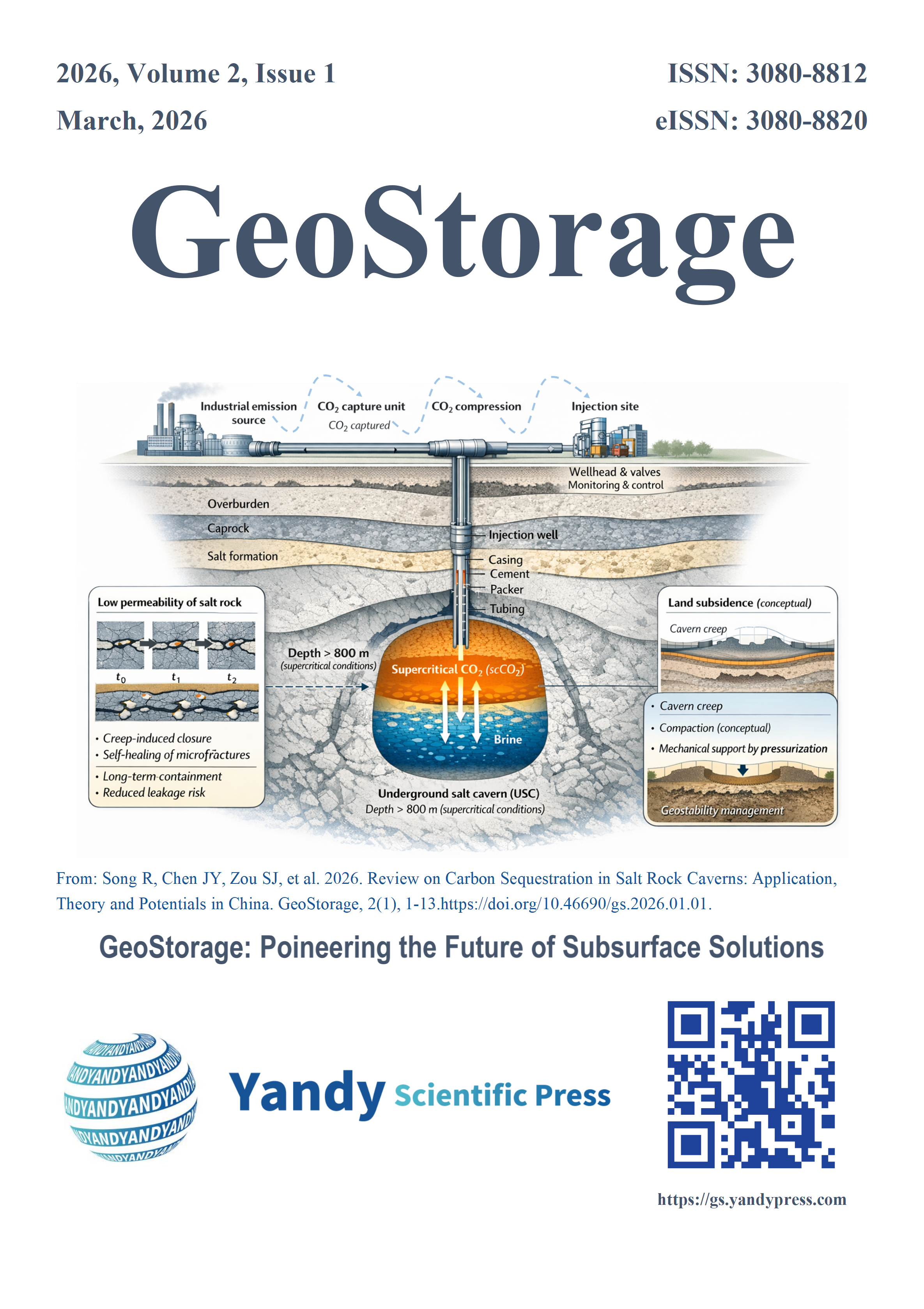
This paper systematically evaluates the technical feasibility, long-term safety, and resource potential of CO2 storage in salt rock cavern (SRC), especially in China. Research indicates that salt caverns represent a highly promising storage option due to their high storage efficiency, although their long-term containment performance is governed by multi-field coupling mechanisms. The transport of CO2 within the surrounding rock is jointly dominated by seepage and diffusion. In China, the widespread occurrence of bedded salt rocks containing interlayers of anhydrite, glauberite, and argillaceous materials significantly complicates the permeation-diffusion network, making it a critical factor in sealing integrity assessment. CO2 injection-induced water–rock interactions exhibit dual effects: mineral dissolution may weaken the surrounding rock and lead to leakage pathways, whereas salt recrystallization and mineral precipitation can enable self-sealing and pore clogging. Additionally, salt precipitation and phase transitions triggered by supercritical CO2 directly affect injectivity and cavern stability. Preliminary estimates suggest that the storage potential of abandoned SRCs in China known by the authors ranges from approximately 56 to 84 million metrictons of CO2, though site-specific evaluation remains essential. The actual potential is likely greater. However, the commercialization of this technology still faces core challenges. Future efforts must prioritize the development of risk prevention and control technologies, along with intelligent monitoring systems, to ensure the long-term safety and efficient operation of CO2 storage in SRCs.
Article type: Review article
Cited as:
Song R, Chen JY, Zou SJ, et al. 2026. Review on Carbon Sequestration in Salt Rock Caverns: Application, Theory and Potentials in China. GeoStorage, 2(1),1-13.
DOI:
https://doi.org/10.46690/gs.2026.01.01Keywords:
CO2 sequestration, salt rock cavern, reactions, sealing integrity, stabilityReferences
Al-Khdheeawi EAA, Mahdi DS, Yuan Y, Iglauer S. 2023. Influence of Clay Content on CO2-Rock Interaction and Mineral Trapping Capacity of Sandstone Reservoirs. Energies, 16(8). https://doi.org/10.3390/en16083489.
Al-Kindi M. 2025. Overview of the Carbon Capture and Storage Opportunities in Oman. Geological Society, London, Special Publications, 550(1):449–467. https://doi.org/10.1144/SP550-2024-7.
Aljama H, Wilcox J. 2017. Microscopic Diffusion of CO2 in Clay Nanopores. Chemical Physics Letters, 677:162–166. https://doi.org/10.1016/j.cplett.2017.04.012.
Ali M, Jha NK, Pal N, et al. 2022. Recent Advances in Carbon Dioxide Geological Storage, Experimental Procedures, Influencing Parameters, and Future Outlook. Earth-Science Reviews, 225:103895. https://doi.org/10.1016/j.earscirev.2021.103895.
Altaf F, Ahmed S, Ali S, et al. 2025. Transforming Natural Resources into Advanced Solutions: The Contribution of Clay-Based Adsorbents to Carbon Dioxide (CO2) Adsorption. Transactions of Tianjin University, 31(2):74–130. https://doi.org/10.1007/s12209-025-00429-1.
Ait BA, Lu P, Al-Atrach J, et al. 2025. A mechanistic study of CO2 gas hydrate formation in a mesoporous zeolite. Nature Communications. https://doi.org/10.1038/s41467-025-67019-6.
Asif M, Junussov M, Longinos S, et al. 2025. CO2 Storage Capacity of Coal Seams: A Screening and Geological Review of Carboniferous Coal Formations of Kazakhstan. International Journal of Coal Science & Technology, 12(1):18. https://doi.org/10.1007/s40789-025-00750-z.
Bachu S, Dusseault MB. 2004. Sequestration of CO2 in Salt Caverns. Journal of Canadian Petroleum Technology, 43(11). https://doi.org/10.2118/04-11-04.
Bachu S, Dusseault MB. 2005. Underground Injection of Carbon Dioxide in Salt Beds. Developments in Water Science, 52:637–648. https://doi.org/10.1016/S0167-5648(05)52049-5.
Bala R, Kaur M, Thakur H, et al. 2025. A Sociotechnical Review of Carbon Capture, Utilization, and Storage (CCUS) Technologies for Industrial Decarbonization: Current Challenges, Emerging Solution, and Future Directions. International Journal of Chemical Engineering, 2025(1). https://doi.org/10.1155/ijce/7195300.
Baumann G, Henninges J, De Lucia M. 2014. Monitoring of Saturation Changes and Salt Precipitation during CO2 Injection Using Pulsed Neutron-Gamma Logging at the Ketzin Pilot Site. International Journal of Greenhouse Gas Control, 28:134–146. https://doi.org/10.1016/j.ijggc.2014.06.023.
Bérest P, Brouard B. 2003. Safety of Salt Caverns Used for Underground Storage Blow Out; Mechanical Instability; Seepage; Cavern Abandonment. Oil & Gas Science and Technology – Rev. IFP, 58(3):361–384. https://doi.org/10.2516/ogst:2003023.
Bérest P, Ghoreychi M, Hadj-Hassen F, et al. 2012. Mechanical Behaviour of Salt VII. London: CRC Press. https://doi.org/10.1201/b12041.
Bourg IC, Ajo-Franklin JB. 2017. Clay, Water, and Salt: Controls on the Permeability of Fine-Grained Sedimentary Rocks. Accounts of Chemical Research, 50(9):2067–2074. https://doi.org/10.1021/acs.accounts.7b00261.
Cadogan SP, Hallett JP, Maidand GC, et al. 2015. Diffusion Coefficients of Carbon Dioxide in Brines Measured Using 13C Pulsed-Field Gradient Nuclear Magnetic Resonance. Journal of Chemical and Engineering Data, 60(1):181–184. https://doi.org/10.1021/je5009203.
Chang J, Qi Y, Yang R, et al. 2025. The Self-Healing Property of Rock Salt Damage in Underground Gas Storage: A Review. Results in Engineering, 27. https://doi.org/10.1016/j.rineng.2025.106098.
Chen S, Liu J, Zhang Q, et al. 2022. A Critical Review on Deployment Planning and Risk Analysis of Carbon Capture, Utilization, and Storage (CCUS) toward Carbon Neutrality. Renewable and Sustainable Energy Reviews, 167:112537. https://doi.org/10.1016/j.rser.2022.112537.
Chen X, Li Y, Shi X, et al. 2025. Microstructure, Seepage Regimes and Stress-Strain Analysis of Bedded Rock Salt Interface. Journal of Energy Storage, 120. https://doi.org/10.1016/j.est.2025.116521.
Cosenza P, Ghoreychi M. 1999. Effects of Very Low Permeability on the Long-Term Evolution of a Storage Cavern in Rock Salt. International Journal of Rock Mechanics and Mining Sciences, 36(4):527–533. https://doi.org/10.1016/S0148-9062(99)00018-2.
Costa PVM da, da Costa AM, Meneghini JR, et al. 2020. Parametric Study and Geomechanical Design of Ultra-Deep-Water Offshore Salt Caverns for Carbon Capture and Storage in Brazil. International Journal of Rock Mechanics and Mining Sciences, 131:104354. https://doi.org/10.1016/j.ijrmms.2020.104354.
Dusseault MB, Bachu S, Davidson B. 2001. Carbon Dioxide Sequestration Potential in Salt Solution Caverns in Alberta, Canada. Proceedings of the SMRI Fall Meeting.
Fuenkajorn K, Phueakphum D. 2011. Laboratory Assessment of Healing of Fractures in Rock Salt. Bulletin of Engineering Geology and the Environment, 70(4):665–672. https://doi.org/10.1007/s10064-011-0370-y.
Gidden MJ, Joshi S, Armitage JJ, et al. 2025. A Prudent Planetary Limit for Geologic Carbon Storage. Nature, 645(8079):124–132. https://doi.org/10.1038/s41586-025-09423-y.
Gislason SR, Oelkers EH. 2014. Carbon Storage in Basalt. Science, 344(6182):373–374. https://doi.org/10.1126/science.1250828.
Goulart MBR, da Costa PVM, da Costa AM, et al. 2020. Technology readiness assessment of ultra-deep salt caverns for carbon capture and storage in Brazil. International Journal of Greenhouse Gas Control, 99:103083. https://doi.org/10.1016/j.ijggc.2020.103083.
Grude S, Landro M, Dvorkin J. 2014. Pressure Effects Caused by CO2 Injection in the Tubaen Fm., the Snohvit Field. International Journal of Greenhouse Gas Control, 27:178–187. https://doi.org/10.1016/j.ijggc.2014.05.013.
Hanson E, Nwakile C, Hammed VO. 2025. Carbon Capture, Utilization, and Storage (CCUS) Technologies: Evaluating the Effectiveness of Advanced CCUS Solutions for Reducing CO2 Emissions. Results in Surfaces and Interfaces, 18:100381. https://doi.org/10.1016/j.rsurfi.2024.100381.
Hosseinzadeh S, Haghighi M, Salmachi A, et al. 2024. Carbon Dioxide Storage within Coal Reservoirs: A Comprehensive Review. Geoenergy Science and Engineering, 241:213198. https://doi.org/10.1016/j.geoen.2024.213198.
Iqbal M, Fan Y, Ahmad N, et al. 2025. Circular Economy Solutions for Net-Zero Carbon in China’s Construction Sector: A Strategic Evaluation. Journal of Cleaner Production, 504:145398. https://doi.org/10.1016/j.jclepro.2025.145398.
International Energy Agency (IEA). 2025. CCUS projects around the world are reaching new milestones – Analysis. https://www.iea.org/commentaries/ccus-projects-aroundthe-world-are-reaching-new-milestones.
Ji Z, Wang H, Wang M, et al. 2024. Experimental and Modeling Study of CO2 Solubility in Formation Brines at In-Situ Conditions. Journal of Cleaner Production, 438. https://doi.org/10.1016/j.jclepro.2024.140840.
Jiang H. 2024. Stability and Utilization Prospect of Salt Cavity in Huai’an Salt Basin. China Well and Rock Salt, 55(5):26–27, 29.
Kaszuba JP, Janecky DR. 2009. Geochemical Impacts of Sequestering Carbon Dioxide in Brine Formations. In Carbon Sequestration and Its Role in the Global Carbon Cycle (American Geophysical Union, AGU), pp 239–247. https://doi.org/10.1029/2006GM000353.
Popp T, Kern H, Schulze O. 2001. Evolution of Dilatancy and Permeability in Rock Salt during Hydrostatic Compaction and Triaxial Deformation. Journal of Geophysical Research: Solid Earth, 106(B3):4061–4078. https://doi.org/10.1029/2000JB900381.
Lahiri N, Kovarik L, Taylor SD, et al. 2025. Complex Carbonate Phases Drive Geologic CO2 Mineralization. Communications Earth & Environment, 6(1):344. https://doi.org/10.1038/s43247-025-02273-6.
Lamy-Chappuis B. 2015. Mineral-Fluid Interactions and Their Implications for the Sequestration of CO2 in Saline Aquifers. PhD thesis, University of Leeds. https://etheses.whiterose.ac.uk/id/eprint/8687/.
Li L, Gracie R, Dusseault MB. 2020. Numerical Simulation of Salt Rock Dissolution. In 54th U.S. Rock Mechanics/Geomechanics Symposium, ARMA-2020-1308.
Li J, Shi X, Yang C, et al. 2018. Mathematical Model of Salt Cavern Leaching for Gas Storage in High-Insoluble Salt Formations. Scientific Reports, 8(1):372. https://doi.org/10.1038/s41598-017-18546-w.
Li S, Qiao C, Zhang C, et al. 2018. Determination of Diffusion Coefficients of Supercritical CO2 under Tight Oil Reservoir Conditions with Pressure-Decay Method. Journal of CO2 Utilization, 24:430–443. https://doi.org/10.1016/j.jcou.2018.02.002.
Li P, Li Y, Shi X, et al. 2024. Gas Tightness around Salt Cavern Gas Storage in Bedded Salt Formations. Renewable Energy, 233. https://doi.org/10.1016/j.renene.2024.121191.
Li Z, Kang Y, Fan J, et al. 2024. Macroscopic Experimental Study and Microscopic Phenomenon Analysis of Damage Self-Healing in Salt Rock. Engineering Geology, 338:107634. https://doi.org/10.1016/j.enggeo.2024.107634.
Li W. 2015. Discussion on the Reuse of Existing Salt Old Cavern of Pingdingshan Salt Field. China Well and Rock Salt, 46(3):20–23.
Lin Z, Liu D, Zhang L, et al. 2025. Evaluation and investigation technology of salt cavern resources in China. Hydrogeology & Engineering Geology, 51(4):53–65. https://doi.org/10.16030/j.cnki.issn.1000-3665.202401051.
Liu W, Li Y, Yang C, et al. 2015. Permeability Characteristics of Mudstone Cap Rock and Interlayers in Bedded Salt Formations and Tightness Assessment for Underground Gas Storage Caverns. Engineering Geology, 193:212–223. https://doi.org/10.1016/j.enggeo.2015.04.010.
Liu W, Li Q, Yang C, et al. 2022. Large-Scale CO2 Disposal/Storage in Bedded Rock Salt Caverns of China: An Evaluation of Safety and Suitability. Energy, 249:123727. https://doi.org/10.1016/j.energy.2022.123727.
Liu W, Duan X, Li Q, et al. 2023. Analysis of Pressure Interval/Injection and Production Frequency on Stability of Large-Scale Supercritical CO2 Storage in Salt Caverns. Journal of Cleaner Production, 433:139731. https://doi.org/10.1016/j.jclepro.2023.139731.
Liu W, Li Q, Yang C, et al. 2023. The Role of Underground Salt Caverns for Large-Scale Energy Storage: A Review and Prospects. Energy Storage Materials, 63:103045. https://doi.org/10.1016/j.ensm.2023.103045.
Long X, He D. 2016. Analysis on Geological Conditions of Underground Salt Cavern Gas Storage in Hengyang Salt Mine. China Well and Rock Salt, 47(1):19–21.
Luan J, Zhang R, Zhao H, et al. 2024. Geological Storage Conditions and Potential Analysis of Carbon Dioxide in the High Steep Fold Belt in Eastern Sichuan Basin. E3S Web of Conferences, 478:01023. https://doi.org/10.1051/e3sconf/202447801023.
Lamy-Chappuis B. 2015. Mineral-Fluid Interactions and Their Implications for the Sequestration of CO2 in Saline Aquifers. PhD thesis, University of Leeds. https://etheses.whiterose.ac.uk/id/eprint/8687/.
Massarweh O, Abushaikha AS. 2024. CO2 Sequestration in Subsurface Geological Formations: A Review of Trapping Mechanisms and Monitoring Techniques. Earth-Science Reviews, 253:104793. https://doi.org/10.1016/j.earscirev.2024.104793.
Metz B, Davidson O, Coninck HD, et al. 2005. IPCC Special Report on Carbon Dioxide Capture and Storage. Economics & Politics of Climate Change.
Stepanek J, Minkley W, Syblik J, et al. 2024. Thermodynamic analysis of compressed CO2 energy storage in salt caverns with gravel stabilization. Journal of Energy Storage, 82:110509. https://doi.org/10.1016/j.est.2024.110509.
Mwakipunda GC, Mgimba MM, Ngata MR, et al. 2024. Recent Advances on Carbon Dioxide Sequestration Potentiality in Salt Caverns: A Review. International Journal of Greenhouse Gas Control, 133:104109. https://doi.org/10.1016/j.ijggc.2024.104109.
Nasiri MR, Rostami B, Nejad MK, et al. 2025. Experimental Investigation of the Intermittent Injection of Brine-scCO2 to Mitigate Salt Precipitation during CO2 Storage in Saline Aquifers. International Journal of Greenhouse Gas Control, 144. https://doi.org/10.1016/j.ijggc.2025.104379.
Nuclear Energy Agency (NEA). 2025. Water, Gas and Solute Movement Through Argillaceous Media. https://www.oecdnea.org/jcms/pl13052/water-gas-and-solute-movementthrough-argillaceous-media?details=true.
Pajonpai N, Bissen R, Pumjan S, et al. 2022. Shape Design and Safety Evaluation of Salt Caverns for CO2 Storage in Northeast Thailand. International Journal of Greenhouse Gas Control, 120:103773. https://doi.org/10.1016/j.ijggc.2022.103773.
Peach CJ. 1991. Influence of Deformation on the Fluid Transport Properties of Salt Rocks. Geologica Ultraiectina, 77: 1–238
Pang J, Liang Y, Mi F, et al. 2024. Nanoscale Understanding on CO2 Diffusion and Adsorption in Clay Matrix Nanopores: Implications for Carbon Geosequestration. Environmental Science & Technology, 58(46):20401–20411. https://doi.org/10.1021/acs.est.4c08158.
Popp T, Kern H, Schulze O. 2001. Evolution of Dilatancy and Permeability in Rock Salt during Hydrostatic Compaction and Triaxial Deformation. Journal of Geophysical Research: Solid Earth, 106(B3):4061–4078. https://doi.org/10.1029/2000JB900381.
Popescu S, Radu M-A, Dinescu S, et al. 2021. Study of the Possibilities of CO2 Storage in the Underground Caverns of Dissolution Salt Mines. MATEC Web of Conferences, 342:06006. https://doi.org/10.1051/matecconf/202134206006.
Rui Z, Liu T, Wen X, Meng S, et al. 2025. Investigating the Synergistic Impact of CCUS-EOR. Engineering, 48:16–40. https://doi.org/10.1016/j.eng.2025.04.005.
Smith N, Boone P, Oguntimehin A, et al. 2022. Quest CCS Facility: Halite Damage and Injectivity Remediation in CO2 Injection Wells. International Journal of Greenhouse Gas Control, 119. https://doi.org/10.1016/j.ijggc.2022.103718.
Snæbjörnsdóttir SÓ, Sigfússon B, Marieni C, et al. 2020. Carbon Dioxide Storage through Mineral Carbonation. Nature Reviews Earth & Environment, 1(2):90–102. https://doi.org/10.1038/s43017-019-0011-8.
Song Y, Song R, Liu J. 2023. Hydrogen Tightness Evaluation in Bedded Salt Rock Cavern: A Case Study of Jintan, China. International Journal of Hydrogen Energy, 48(78):30489–30506. https://doi.org/10.1016/j.ijhydene.2023.04.197.
Song Z, Yang L, Jiang F, et al. 2023. The Mechanism of Clay Mineral Transformation in CO2 Geological Storage and Its Impact on Long-Term Storage Potential. Geoenergy Science and Engineering, 242:213192. https://doi.org/10.1016/j.geoen.2024.213192.
Song R, Song Y, Liu J, et al. 2024. Multiscale Experimental and Numerical Study on Hydrogen Diffusivity in Salt Rocks and Interlayers of Salt Cavern Hydrogen Storage. International Journal of Hydrogen Energy, 79:319–334. https://doi.org/10.1016/j.ijhydene.2024.06.418.
Song Y, Song R, Liu J, et al. 2025. Evaluation on H2, N2, He & CH4 Diffusivity in Rock and Leakage Rate by Diffusion in Underground Gas Storage. International Journal of Hydrogen Energy, 100:234–248. https://doi.org/10.1016/j.ijhydene.2024.12.299.
Soubeyran A, Rouabhi A, Coquelet C. 2019. Thermodynamic Analysis of Carbon Dioxide Storage in Salt Caverns to Improve the Power-to-Gas Process. Applied Energy, 242:1090–1107. https://doi.org/10.1016/j.apenergy.2019.03.102.
Stepanek J, Minkley W, Syblik J, et al. 2024. Thermodynamic analysis of compressed CO2 energy storage in salt caverns with gravel stabilization. Journal of Energy Storage, 82:110509. https://doi.org/10.1016/j.est.2024.110509.
Sun L, Liu Y, Cheng Z, et al. 2023. Review on Multiscale CO2 Mineralization and Geological Storage: Mechanisms, Characterization, Modeling, Applications and Perspectives. Energy Fuels, 37(19):14512–14537. https://doi.org/10.1021/acs.energyfuels.3c01830.
Sun L, Liu Y, Ren J, et al. 2025. Salt Precipitation and Pore Structure Changes during CO2 Injection into Porous Media. Journal of Cleaner Production, 505. https://doi.org/10.1016/j.jclepro.2025.145446.
Talman S, Shokri AR, Chalaturnyk R, et al. 2020. Salt Precipitation at an Active CO2 Injection Site. In Gas Injection into Geological Formations and Related Topics (John Wiley & Sons, Ltd), pp 183–199. https://doi.org/10.1002/9781119593324.ch11.
Tao H, Qian X, Zhou Y, et al. 2022. Research Progress of Clay Minerals in Carbon Dioxide Capture. Renewable and Sustainable Energy Reviews, 164:112536. https://doi.org/10.1016/j.rser.2022.112536.
Wang J, Ba J, Wang W. 2022. Distortion Influence on Cavern Volume of Jintan Salt Cavern Gas Storage. Journal of Southwest Petroleum University(Science & Technology Edition), 44(6):105–113.
Wang J, Zhao Y, An Z, et al. 2022. CO2 Storage in Carbonate Rocks: An Experimental and Geochemical Modeling Study. Journal of Geochemical Exploration, 234:106942. https://doi.org/10.1016/j.gexplo.2021.106942.
Wang L. 2019. Conception of Comprehensive Utilization of Dissolving Cavity in Zhaoji Salt Mine. China Well and Rock Salt, 50(5):20–23.
Wang P, Shi B, Li N, et al. 2023. CCUS Development in China and Forecast Its Contribution to Emission Reduction. Scientific Reports, 13(1):17811. https://doi.org/10.1038/s41598-023-44893-y.
Wang T, Yang C, Shi X, et al. 2015. Failure Analysis of Thick Interlayer from Leaching of Bedded Salt Caverns. International Journal of Rock Mechanics and Mining Sciences, 73:175–183. https://doi.org/10.1016/j.ijrmms.2014.11.003.
Wang X, Ruan Y, Yang G, et al. 2024. Preliminary Assessment of the Geological Suitability for Gas Storage in Deep Underground Space of the Hengyang Salt Mining Area. Ground Water, 46(1):163–165, 255. https://doi.org/10.19807/j.cnki.DXS.2024-01-051.
Warren JK. 2016. Evaporites: A Geological Compendium. Cham: Springer International Publishing. https://doi.org/10.1007/978-3-319-13512-0.
Wu X, Ma L, Meng T, et al. 2024. The Effect of Fracture Growth Rate on the Fracture Process Zone of Salt Rock after Heat Treatment. Engineering Fracture Mechanics, 301. https://doi.org/10.1016/j.engfracmech.2024.110038.
Yin H, Ma H, Shi X, et al. 2019. Experimental Study on Repair Characteristics of Damaged Rock Salt of Underground Gas Storage. Journal of Central South University, 26(8):2185–2196. https://doi.org/10.1007/s11771-019-4165-9.
Yin Y, Zhang L, Cao X, et al. 2025. Progress, Challenges, and Prospects of CO2 Mineral Sequestration in Basalt: A Critical Review. Applied Energy, 381:125127. https://doi.org/10.1016/j.apenergy.2024.125127.
Yan L, Niftaliyev R, Voskov D, et al. 2025. Dynamics of Salt Precipitation at Pore Scale during CO2 Subsurface Storage in Saline Aquifer. Journal of Colloid and Interface Science, 678:419–430. https://doi.org/10.1016/j.jcis.2024.08.265.
Yi W, Du J, Zhai Y, et al. 2024. Evaluation of Airtightness of Old Cavity Gas Storage in Sanshui Salt Mine. China Well and Rock Salt, 55(1):20–22, 25.
Yu D, Wang Z, Li S. 2024. With a total investment of 11.8 billion yuan, an industrial cluster for salt cavern energy storage is being built. Shandong Business Journal, September 30, 2024, p T7. https://doi.org/10.28685/n.cnki.nsdsb.2024.002230.
Yu X. 2024. Drilling speed and quality improvement technology in the Zhaoji Salt Mine. Complex Hydrocarbon Reservoirs, 17(4):480–485. https://doi.org/10.16181/j.cnki.fzyqc.2024.04.018.
Yuan T, Fischer C. 2021. Effective Diffusivity Prediction of Radionuclides in Clay Formations Using an Integrated Upscaling Workflow. Transport in Porous Media, 138(2):245–264. https://doi.org/10.1007/s11242-021-01596-0.
Zhang X, Liu W, Chen J, et al. 2022. Large-Scale CO2 Disposal/Storage in Bedded Rock Salt Caverns of China: An Evaluation of Safety and Suitability. Energy, 249:123727. https://doi.org/10.1016/j.energy.2022.123727.
Zhang G, Wang X, Shi X, et al. 2025. Stability Evaluation and Economic Analysis of Four-Well Inter connection Salt Cavern Hydrogen Storage-A Case Study of Huai’an, China. Renewable Energy, 243:122417. https://doi.org/10.1016/j.renene.2025.122417.
Zhang Xuemin, et al. 2025. Phase transition kinetics and mass transfer characteristics of CO2 hydrate formation process under geological storage conditions: A comprehensive review. Journal of Cleaner Production, 495:145055. https://doi.org/10.1016/j.jclepro.2025.145055.
Zhang B, Liu T, Xi Z, et al. 2020. Preliminary Evaluation and Insights on the Reconstruction of Pingdingshan Salt Mine into an Underground Salt Cavern Gas Storage Facility. In Proceedings of the 32nd National Natural Gas Academic Annual Conference (2020), Chongqing, China, pp 2853–2861. https://doi.org/10.26914/c.cnkihy.2020.065196.
Zhou D, Li J, Wang X, et al. 2017. Feasibility of the reuse of existing salt mining caverns in Yunying area. Oil & Gas Storage and Transportation, 36(8):930–936.
Downloads
Downloads
Published
How to Cite
Issue
Section
License
Copyright (c) 2026 GeoStorage

This work is licensed under a Creative Commons Attribution-NonCommercial-NoDerivatives 4.0 International License.